Chemical Exfoliants 101: AHAs, BHAs, and PHAs Explained

If you have a glycolic toner on your bathroom counter or a salicylic acid cleanser in your shower, you’re already using chemical exfoliants. As the weather turns colder and your skin starts looking dull and dry, these ingredients can help, as long as you’re using the right one for your skin.
At Berks Plastic Surgery’s Reading dermatology clinic, we help patients figure out which exfoliating acids suit their skin type, and when it’s time to try a professional treatment instead. We asked our Dermatology Physician Assistant, Stacey Spehalski, PA-C, MPH, to explain how AHAs, BHAs, and PHAs differ and how to use them without irritating your skin.
What do chemical exfoliants do?
Your skin sheds dead cells on its own, but leftover buildup can still make it look dull and feel rough. Chemical exfoliants loosen the bonds holding those cells in place, so they come off more evenly. How strong an acid feels depends on its type, its concentration, and its pH (how acidic the formula is).
Scrubs, brushes, and sponges work by friction instead. For dry, sensitive, or acne-prone skin, a scrub may be too irritating. A mild chemical exfoliant paired with gentle circular motions using your fingertips is a gentler alternative.
AHAs (alpha hydroxy acids)
AHAs work mainly on the surface of your skin. Reach for an AHA if you want to improve texture, tone, or fine lines, including rough, uneven skin from years of sun. For at-home glycolic and lactic acid products, an industry safety panel set a limit of 10 percent or less, along with a pH of 3.5 or higher and directions to use daily sun protection.
Glycolic acid
Glycolic acid is one of the hydroxy acids commonly used in cosmetics, and you’ll spot it in plenty of cleansers, toners, and serums. It can help sun-damaged skin. If your skin is sensitive, though, it may sting or burn.
Lactic acid
Lactic acid is the other AHA you’ll see on a lot of labels. Many hydroxy acid products work as both exfoliants and moisturizers, so a lactic acid product can be a good fit for dry skin, especially in winter.
Mandelic acid
Mandelic acid is a gentler, slower-acting AHA that’s often used for acne. In a randomized trial of 50 patients with mild to moderate acne, a 45% mandelic acid peel worked about as well as a 30% salicylic acid peel and caused fewer side effects. If your skin is sensitive, or tends to darken after irritation, mandelic acid might be a better option for you.

BHAs (beta hydroxy acids)
Salicylic acid is the BHA you’ll typically find in skincare products. Unlike AHAs, salicylic acid is fat soluble, which makes it useful for oily skin. It can get into oily pores, where dead skin and oil build up into blackheads and breakouts, so it’s a smart pick for clogged pores and mild acne.
A salicylic acid face wash or spot treatment can handle the occasional pimple. Acne that sticks around or leaves marks is worth a dermatology visit, and Stacey treats acne as part of her practice. When drugstore products haven’t helped, our acne treatment options give you more to work with.
“I’ve been seeing Stacey for almost the past year for my skin exams and acne and she’s awesome! She’s very nice and always makes me feel so comfortable whenever I’m in the exam room…She helped to clear my acne after struggling with it for the past few years, and I couldn’t be happier with the way my skin looks.”
–5-star Google review
PHAs (polyhydroxy acids)
PHAs, such as gluconolactone, are a gentler type of chemical exfoliant. They exfoliate much like AHAs but with less irritation, and they also act as humectants (ingredients that pull water into the skin). That extra moisture helps balance out the dryness acids can cause.
If your skin is sensitive or glycolic acid has stung you before, a PHA is a comfortable place to start.
AHA vs. BHA vs. PHA: How to choose the right acid for your skin type
Pick one acid based on your skin type and the concern that bothers you most:
- Dry or dull skin: lactic acid
- Oily or acne-prone skin: salicylic acid (BHA) to clear out pores
- Sun damage or rough texture: glycolic acid, if your skin tolerates it
- Sensitive or reactive skin: a PHA such as gluconolactone, or mandelic acid
- Combination skin: a BHA where you’re oily and a gentle AHA or PHA where you’re dry
- Deeper skin tones: mandelic acid or a PHA, added slowly
If most products sting or burn, or you have rosacea or eczema, check in with Stacey before you add an acid. She can look at your skin and recommend one acid to start with.
How to start without irritating your skin
Most irritation from acids comes from using them too often or layering too many at once. A few habits keep your skin barrier happy:
- Start slowly. Use your acid a few times a week, not every day. Stronger exfoliants need to be used less often, and you can build up once your skin stays calm.
- Stick to one acid. Give your skin a few weeks with it before adding anything else.
- Moisturize afterward. Exfoliating can dry out your skin, so follow with a moisturizer every time.
- Wear sunscreen every day. AHAs can make your skin more sensitive to the sun, and the FDA advises sun protection with BHAs as well.
- Give irritated skin a break. Skip exfoliating over a sunburn or an open cut.
Keep wearing sunscreen for at least a week after your last AHA application, too. The FDA recommends that AHA products carry a sunburn alert telling you to use sunscreen and limit time in the sun while you use the product and for a week afterward. For a full morning and evening routine, see our guide on how to create the best skincare routine.
When to see a professional
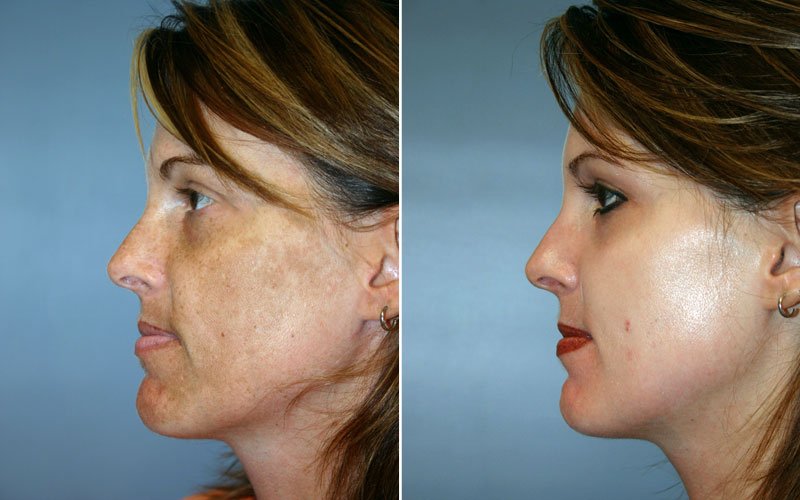
At-home acids are kept at low strengths, so they work best for maintenance. If dark spots, acne scars, or sun damage haven’t faded after a few months of steady use, a professional peel works at a higher strength.
We offer chemical peels in Reading, PA, including a salicylic acid peel and a glycolic treatment, and our aestheticians can help you choose. For pigmentation, sun damage, and acne, the VI Peel is a medium-depth peel that can be customized for your skin, including deeper skin tones. Most patients go back to their normal routine the same day, and visible peeling usually starts about three to five days after treatment.
When spots and scarring don’t budge after a few months at home, it may be time to ask about a professional peel.
Frequently Asked Questions
If you have more questions about chemical exfoliants, or you’d like to ask about professional chemical peels and medical-grade skincare, we invite you to schedule an appointment with Stacey or one of our providers by calling 610-320-0200 or booking an appointment online.
References »
- U.S. Food and Drug Administration. Alpha hydroxy acids. fda.gov
- American Academy of Dermatology. How to safely exfoliate at home. aad.org
- Kornhauser A, Coelho SG, Hearing VJ. Applications of hydroxy acids: classification, mechanisms, and photoactivity. Clinical, Cosmetic and Investigational Dermatology. 2010;3:135–142. doi:10.2147/CCID.S9042. PMC3047947
- Talakoub L, Wesley NO. Mandelic acid. MDedge Dermatology. mdedge.com
- Dayal S, Kalra KD, Sahu P. Comparative study of efficacy and safety of 45% mandelic acid versus 30% salicylic acid peels in mild-to-moderate acne vulgaris. Journal of Cosmetic Dermatology. 2020;19(2):393–399. doi:10.1111/jocd.13168. PMID 31553119
- Arif T. Salicylic acid as a peeling agent: a comprehensive review. Clinical, Cosmetic and Investigational Dermatology. 2015;8:455–461. doi:10.2147/CCID.S84765. PMC4554394
- U.S. Food and Drug Administration. Beta hydroxy acids. fda.gov
- American Academy of Dermatology. How to test skin care products. aad.org
- American Academy of Dermatology. Chemical peels: FAQs. aad.org
- U.S. Food and Drug Administration. FDA warns against purchasing or using chemical peel skin products without professional supervision. July 30, 2024. fda.gov
- American College of Obstetricians and Gynecologists. Skin conditions during pregnancy (FAQ). acog.org